How Technical SEO Protected and Grew a High-Traffic Marketplace to 1M Google Clicks a Quarter
A high-traffic online marketplace was earning well but standing on a fragile technical foundation: Google was declining to index 42% of its pages, overriding its canonicals, and logging thousands of errors, the same pattern that algorithm updates punish. A data-led technical SEO programme protected the pages that earn, fixed the signals dragging the site down, and grew it to over 1 million Google clicks in three months.
Confidentiality Declaration
Client Identity Withheld Under NDA
This campaign is published with the client's brand name and domain intentionally withheld to honor contractual confidentiality requirements. The industry, strategy, and redacted performance data are shared so the work can be evaluated without compromising client confidentiality.
1.01M Clicks in 3 Months
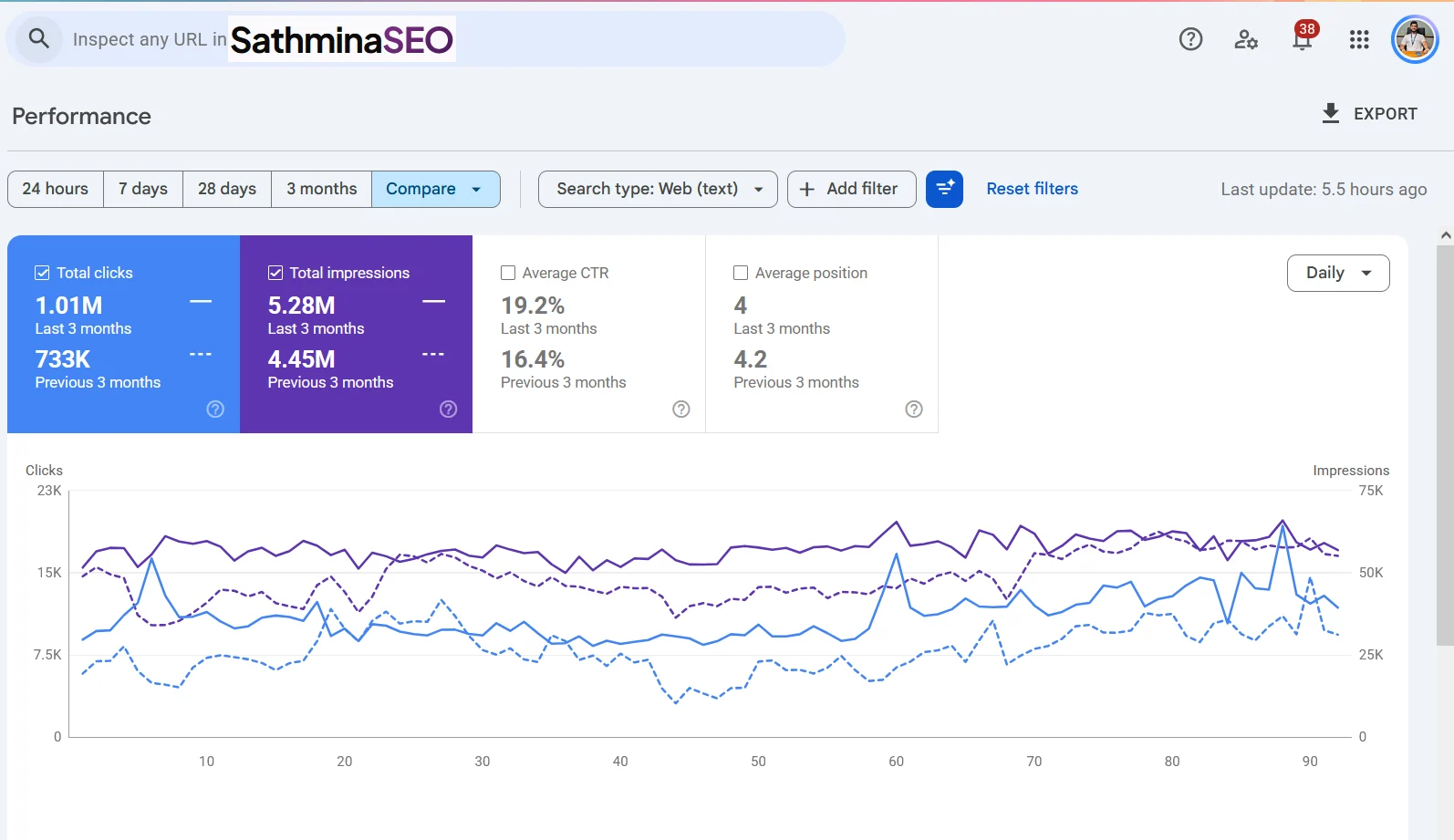
Comparing the last three months with the previous three: Google clicks rose 38%, from 733K to 1.01M, impressions rose 19% to 5.28M, click-through rate improved from 16.4% to 19.2%, and average position from 4.2 to 4.0.
From 250K to 350K Clicks in 28 Days
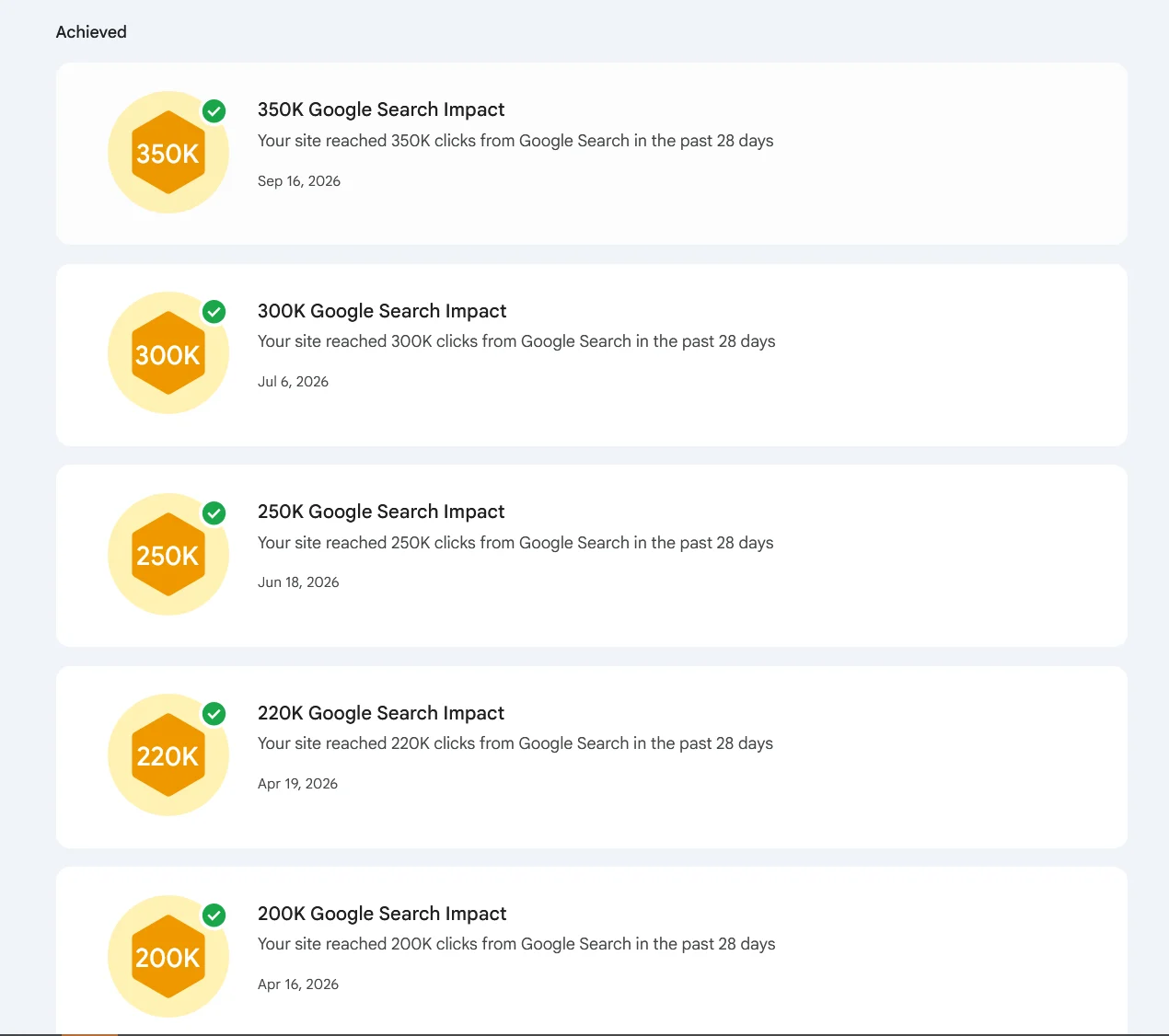
Google's own milestones. When the engagement began in June 2026, the site had just passed 250K clicks in 28 days. It reached 300K in July and 350K in September.
428K Users, 11M Views in 90 Days
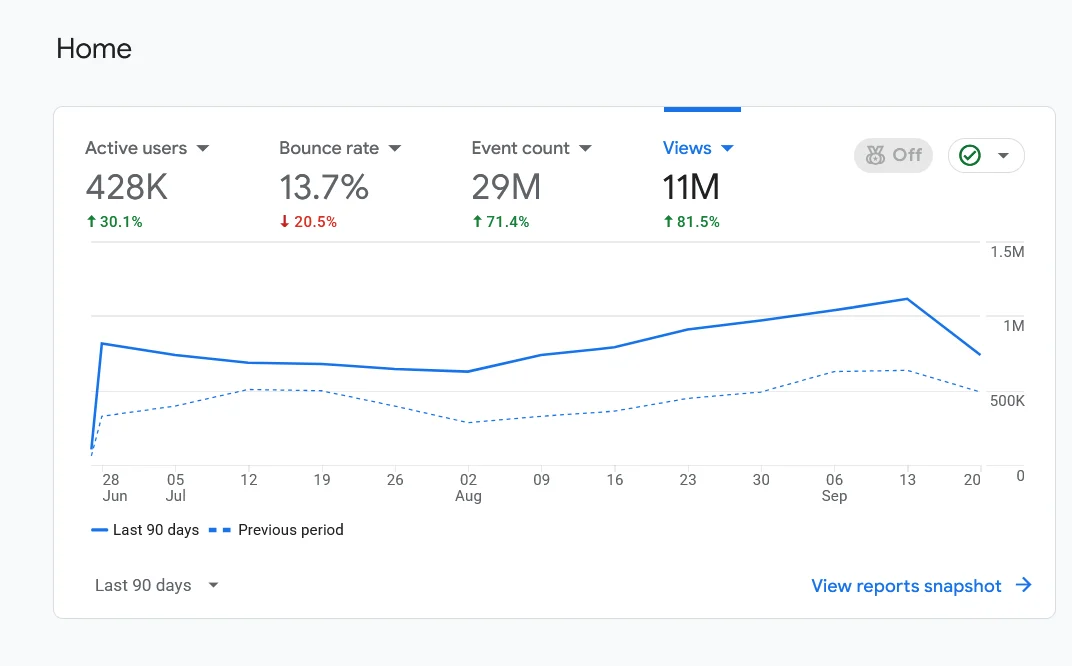
Google Analytics for the last 90 days: 428K active users, up 30.1%, and 11M views, up 81.5%. Bounce rate fell 20.5% to 13.7%, a sign that visitors were landing on pages that matched what they were looking for.
632 Users in 30 Minutes
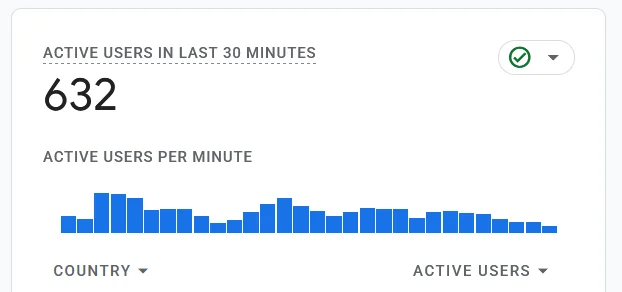
A real-time snapshot: 632 people using the platform within a single 30-minute window.
Organic Search: 875K Sessions, +47%
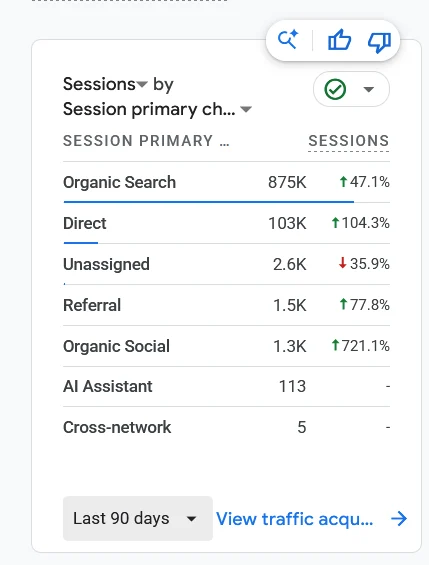
Organic search delivered 875K sessions in 90 days, up 47.1% and more than eight times any other channel.
01
Challenge
The client runs a high-traffic online marketplace with a very large and constantly growing page count. On the surface, it was doing well. Underneath, the technical signals told a far more dangerous story.
Of roughly 28,000 URLs Google knew about, it had declined to index 11,775, about 42% of the site. That is the clear footprint of a site Google reads as largely low-value. Google was also overriding the site's chosen canonical on around 1,965 pages, treating them as duplicates of something else, and roughly 3,500 "not found" errors had built up. Much of the index was made up of thin, near-duplicate, and paginated pages.
That is exactly the pattern algorithm updates punish. Sites in this niche are routinely hit and suppressed overnight, and the site's good numbers did not make it immune; it was one update away from the same fate. The goal was to move it onto durable technical ground before it took a hit, not after.
This was protection and recovery work, not ordinary "grow the rankings" SEO. In this kind of niche, rankings are lost more often than won, and I was upfront with the client that no one can guarantee what Google will do.
02
Solution
The engagement began in June 2026 with a full technical SEO audit designed to reach a defensible diagnosis rather than a guess. It covered every known URL and its index status, around 16 months of Search Console data, two years of daily traffic history, complete technical crawls of the site and its leading competitors, and a quality-filtered review of the backlink profile.
The diagnosis was clear. The problem was not a single bug and not a shortage of backlinks. Too many thin, near-duplicate, and paginated pages were indexed, so Google was treating large parts of the site as low-quality. Duplicate URLs and overridden canonicals made that worse. Because Google is a black box, I treated this as a strong, data-backed hypothesis and worked in a loop of test, measure, and adjust.
The strategy ran on two tracks. The first was to protect and preserve. I built a protected-pages list of the pages earning traffic and made sure no technical change put them at risk. That included pages that, by the textbook, should not have been indexed at all but were among the site's biggest earners. The by-the-book move would have been to clean them up; I deliberately did not. Protecting live traffic mattered more than following the rulebook to the letter, and knowing when to step away from standard guidance is part of the job.
The second track was careful, traffic-gated cleanup. Indexation management and technical fixes tackled duplicate URLs, canonical signals, the build-up of errors, and structured data. Every fix was delivered as a detailed specification for the development team through a shared action tracker: a 51-task plan phased across stabilising, recovering, and fortifying the site. A launch-safe template ensures new pages start clean instead of repeating the problem, and legacy low-quality backlinks that now worked against the site were audited for disavowal.
On-page work followed on solid ground, with a ready-to-implement pack of titles, meta descriptions, and content for the homepage and key category pages. All of it sits within an algorithm update recovery framework that monitors every Google update, because in this niche a site left unattended after a fix is the one the next update catches.
03
Result
The protection-first approach held, and the site kept growing. When the engagement began in June 2026, it had just passed 250K Google clicks in 28 days. It reached 300K in July and 350K in September.
Comparing the last three months with the previous three, Google clicks rose 38%, from 733K to 1.01M, and impressions rose 19%, to 5.28M. Click-through rate improved from 16.4% to 19.2% and average position from 4.2 to 4.0, meaning the site earned more clicks from the searches it already appeared for.
Google Analytics shows the same momentum. Over the last 90 days, the site recorded 428K active users, up 30.1%, and 11M page views, up 81.5%, while bounce rate fell 20.5% to 13.7%. Organic search delivered 875K sessions, up 47.1%, more than eight times any other channel. At one moment, 632 people were using the site within a single 30-minute window.
This is an ongoing, phased engagement, and the work is not finished. Google keeps changing, and a site like this is never permanently safe. But it is now growing on a stronger technical foundation, with its most valuable pages protected and a clear, evidence-based plan for every update that comes next.
About the Author
Next Step
Ready to see results like these?
Let's talk about what a focused SEO strategy could deliver for your business. No agency layers, no junior staff - just direct specialist work.