How a Bootstrapped SaaS Product Reached 20,000 Monthly Organic Visits in Under a Year
A bootstrapped, ad-supported SaaS product that combined technical SEO, programmatic expansion, content optimisation, and link building to reach 20,132 estimated monthly organic visits in under a year.
20,132 Estimated Monthly Organic Visits
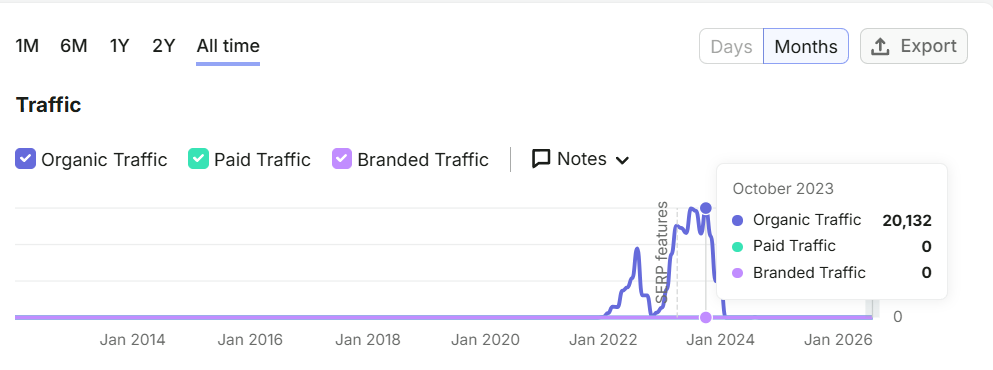
Semrush estimated 20,132 monthly organic visits at the October 2023 peak, with no paid or branded traffic recorded in the snapshot.
1,904 Ranking Keywords
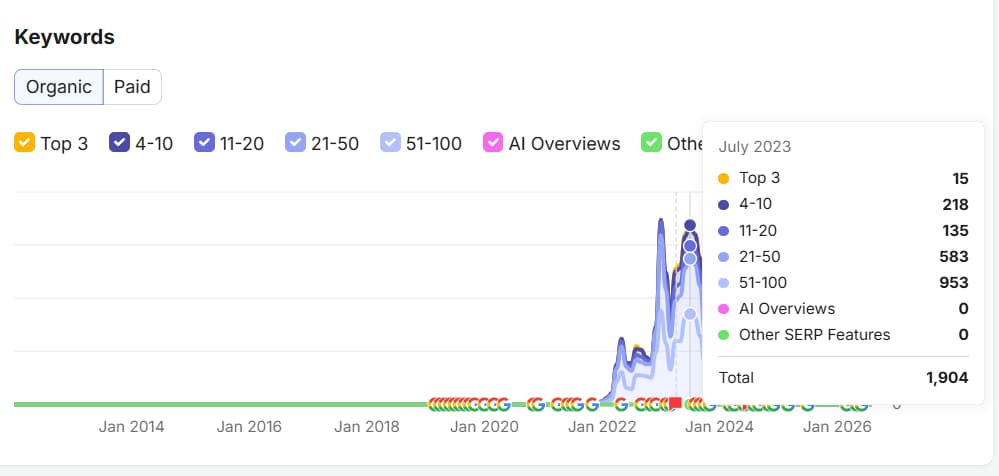
By July 2023, Semrush tracked 1,904 organic keywords: 15 in the top three and another 218 in positions four to ten.
First-Party Search Performance
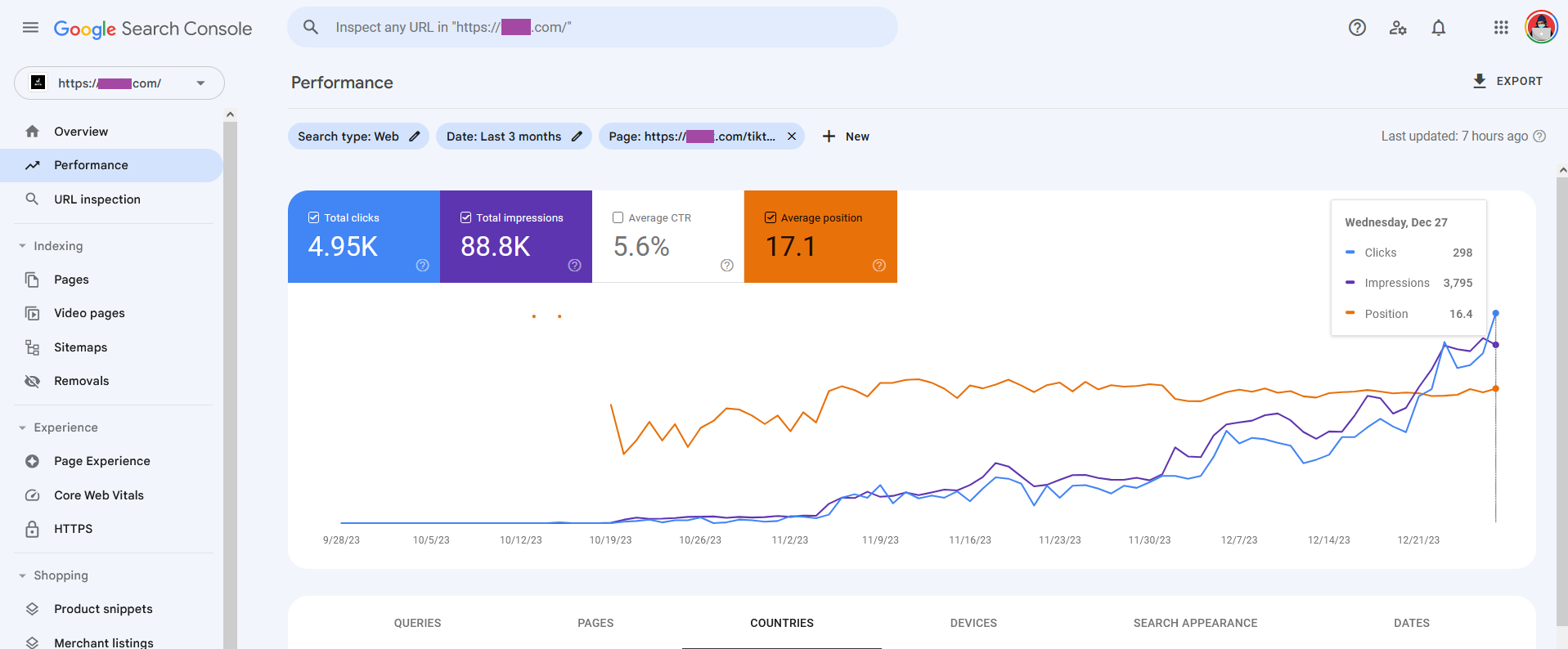
This Search Console report covers one landing page, not the full website. That page alone recorded 4,950 clicks and 88,800 impressions during the three-month period ending in December 2023, with a 5.6% click-through rate.
Real Users Across Global Markets
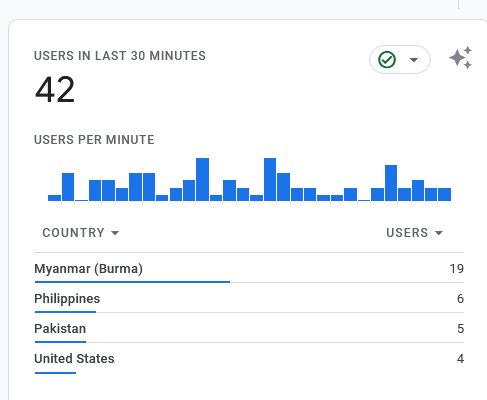
A November 2023 Google Analytics snapshot recorded 42 users in the preceding 30 minutes, with visitors arriving from several international markets.
01
Challenge
In December 2022, I launched an ad-supported consumer SaaS product with a co-founder who was a senior software engineer. He led the software development while I oversaw SEO across the product, turning the site itself into a practical test of how search could acquire users for a new online service.
The site needed to compete for high-volume searches without an established brand or existing audience. One primary utility page served the core user need, while supporting pages expanded into informational topics and closely related searches. The initial market focus included the United States, India, and the United Kingdom, but the product also began attracting users from other countries as its visibility grew.
The real challenge was not publishing more pages for the sake of scale. It was creating a structure in which the main tool, supporting content, and technical foundation worked together: useful enough for visitors, understandable to search engines, and scalable enough to cover a wider search journey.
02
Solution
I began by mapping the main utility intent and the related questions people searched before and after using the tool. The primary page was optimised around the core task, while informational pages extended the site's reach into relevant supporting searches instead of relying on disconnected blog content.
Programmatic SEO helped expand that footprint efficiently. The page system was built to support repeatable search patterns, while content optimisation kept the headings, metadata, copy, and page purpose aligned with what each query required. Technical SEO supported the wider structure through crawlability, indexation, and a consistent architecture as the number of search entry points increased.
Link building developed the authority needed to compete beyond low-difficulty terms. The campaign was managed as one connected system: technical access made the pages discoverable, relevant content gave them a reason to rank, programmatic expansion increased coverage, and authority work helped the site compete across international search results.
This is the same principle behind my current SEO services: research identifies genuine demand, site architecture connects it to the right pages, content satisfies the search, and technical and authority work support the whole system rather than operating as isolated monthly tasks.
03
Result
The site moved from a new launch in December 2022 to meaningful international organic visibility during 2023. By July, Semrush tracked 1,904 ranking keywords, including 15 in the top three and a further 218 in positions four to ten. That meant 233 first-page keyword positions within roughly seven months of launch.
Semrush estimated 20,132 monthly organic visits across the entire website in October 2023. The Search Console screenshot measures a different scope: one primary landing page generated 4,950 verified clicks and 88,800 impressions over a three-month period. A November Google Analytics snapshot also captured 42 users active within 30 minutes.
The traffic became a small but functioning media business. During the later six months of the project, Google AdSense typically generated around $100 to $200 per month. The revenue was modest, but it demonstrated that the search visibility was attracting real users consistently enough to monetise.
The project was voluntarily retired in January 2024 following a copyright complaint from the platform. The product name and domain are intentionally omitted, and the results shown here document its historical performance before closure. The outcome remains commercially relevant: a new SaaS product used search as its primary acquisition channel and grew from zero visibility to thousands of ranking keywords and five-figure estimated monthly organic traffic in under a year.
About the Author
Next Step
Ready to see results like these?
Let's talk about what a focused SEO strategy could deliver for your business. No agency layers, no junior staff - just direct specialist work.